

Every EQIP application you submit enters a competitive ranking pool. Your EQIP ranking and eligibility scoring determines where your farm sits in that queue—and whether your contract gets funded in the current signup or held until the next one. NRCS does not fund all applications equally. Eligibility is binary: you either meet the baseline requirements or you don't. Ranking is where the real sorting happens, and it's the mechanism that separates producers who understand the scoring from those who hope their soil health practice gets noticed.
Understanding EQIP ranking and eligibility scoring for NRCS assignments
NRCS eligibility screening comes first. Your operation must be on eligible land, you must meet farm size thresholds, and you cannot have outstanding EQIP contract violations or environmental compliance issues. These checks are yes-or-no gates. If you fail eligibility, your application does not enter the ranking pool at all.
Once you pass eligibility, NRCS scores your application against published criteria. Most of those criteria are state-specific and tied to the resource concerns NRCS prioritizes in your region. A farm in Minnesota proposing cover crops to address nitrate leaching gets ranked differently than the same operation in Iowa proposing the identical practice.
The ranking score itself reflects how effectively your proposed practices address the state's environmental priorities. NRCS typically weights scores across categories: resource concern (soil health, water quality, wildlife habitat, air quality), practice effectiveness, producer commitment, and environmental outcome per dollar. A proposal that stacks three practices addressing the same priority concern usually scores higher than a single practice on the same field.
Quick Tips
- Request your state's scoring rubric from your NRCS office before you write your application—it's public, and knowing the weights for each criterion lets you design your proposal to match priorities.
- Document baseline soil test results, yield history, and current practice details in your application. Specificity raises your ranking score versus vague or generic descriptions.
- Align your proposed practices with your state's published resource concerns. Applications addressing multiple concerns on the same field almost always rank higher than single-practice proposals.
- Confirm your eligibility status (land type, farm size, compliance record) with your NRCS office at least 60 days before the signup closes.
Resource Concerns Drive Scoring Weight Across States
NRCS assigns different scoring weights to different resource concerns depending on regional water quality, soil conditions, and environmental threats. In Iowa and Illinois, where row-crop nutrient runoff and groundwater nitrate are top priorities, applications proposing cover crops or advanced drainage-nutrient-management combinations receive higher scoring weight than applications addressing wildlife habitat alone.
In the Upper Midwest, where soil organic matter is lower and erosion risk is acute, practices like no-till establishment or residue management score more competitively. Conversely, in regions with chronic phosphorus loss to surface water, applications targeting phosphorus-reduction practices rank first.
Your application's strength depends on how tightly you align your proposed practices with that published priority list. A soil health proposal that also reduces water loss and improves nutrient cycling addresses multiple concerns, so it typically earns higher ranking points than a narrower application.
| Scoring Element | How It Affects Rank | Your Control Level |
|---|---|---|
| Resource concern alignment | Higher weight if practices address state priority | High—choose practices matching published concerns |
| Baseline documentation | Stronger score with soil tests, yield records, photos | High—gather records before application |
| Practice stacking | Multiple practices on same field rank higher | Medium—limited by field size and practice compatibility |
| Environmental outcome per dollar | Lower cost-share for same benefit improves score | Low—cost-share rates are set by NRCS |
The Mistake Most Producers Make — Weak Baseline Documentation
The biggest scoring error is submitting an application with minimal or missing baseline data. A producer writes, "I want to plant cover crops to improve soil health," but provides no soil test results, no yield history for the field, and no photographs of current conditions. NRCS cannot score environmental benefit against a baseline they cannot see.
A stronger application states: "Soil test results from March 2026 show organic matter at 3.2%, nitrate-N at 12 ppm, and phosphorus at 18 ppm. Yield averaged 168 bu/ac over three years. Cover crop will reduce residual nitrogen carryover and build organic matter by an estimated 0.1 to 0.2% annually." That specificity lets NRCS assign points for measurable outcome.
Gather soil samples, compile yield maps, take field photographs, and document current practices at least 90 days before signup closes. Your baseline becomes your ranking foundation.
Contract Priority and Funding Timing After Ranking
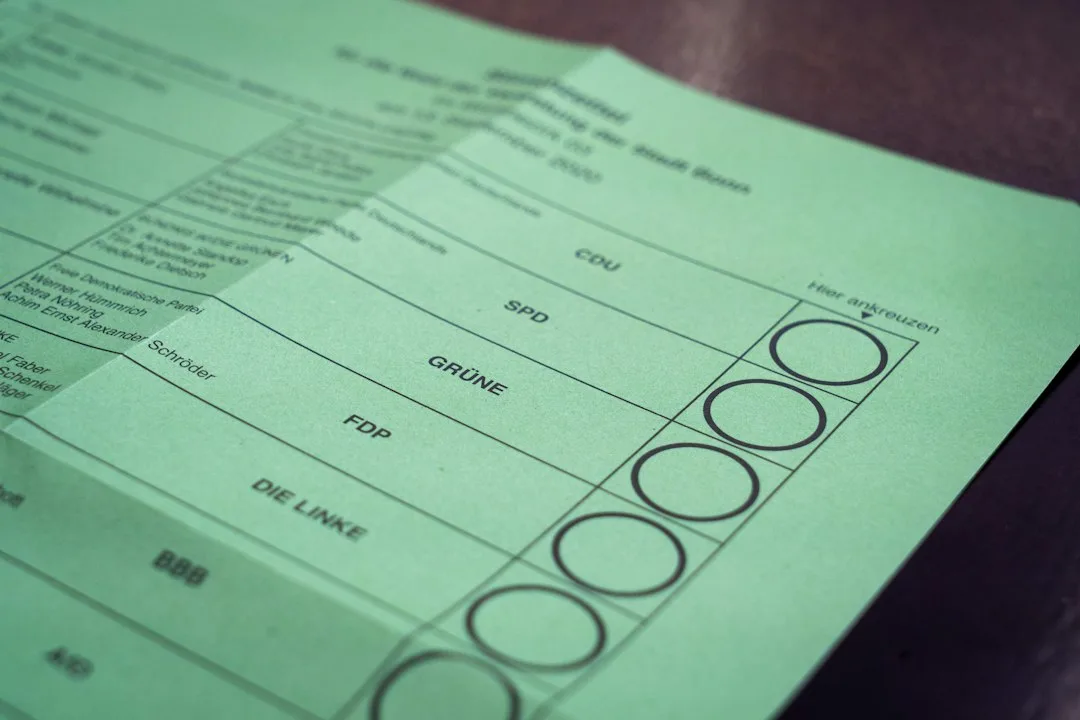
Once NRCS ranks all applications in a signup window, the highest-scoring applications are selected for contract offers in order of rank. Funding is limited by state allocation, so applications in the middle of the ranking often do not receive offers in that signup window.
You do not automatically move to the next signup. If you are ranked 25th and only 20 contracts are funded, your application is typically archived. You must reapply in the next signup window, though some NRCS offices allow ranked-but-unfunded applications to roll forward with updates.
Knowing your state's historical contract counts helps you gauge your odds. Find your state's signup window and check NRCS historical data for how many contracts were funded in your county over the past three signup cycles. If your state funded 50 applications in a signup and received 200 applications, your ranking needs to be in the top 25% to have a real chance.
Strengthening Your Application Before You Submit
Request your state's scoring rubric directly from your NRCS field office or download it from the EQIP signup page. Most states post these publicly, and they show exactly which criteria carry the highest weight. Build your application to score maximum points on those high-weight criteria.
If your state weights resource concerns at 40% of the total score and environmental outcome at 30%, design your proposal around those two categories. Spend less text on criteria that carry lower weight. NRCS reviewers work through hundreds of applications; applications structured to match the scoring template score higher and faster.
Stack practices where agronomically sound. A field getting cover crop plus reduced-tillage plus edge-of-field buffers typically outranks a field with cover crop alone, assuming all practices are eligible and the field can physically support them. Learn why EQIP cover crop timing and signup mechanics matter for your competitive positioning in ranking pools.
Engage your NRCS conservation planner early—at least 120 days before the deadline. Many field offices offer pre-application reviews that identify scoring weaknesses before you submit. That review is free and often the difference between a top-quartile and middle-quartile rank.
Monitoring and Adjusting After You Rank
If your application is ranked but not funded, request written feedback on your score and the practices that scored lowest. Some NRCS offices provide score breakdowns; others do not, but a conversation with your planner can reveal which sections hurt your rank.
For the next signup, strengthen those sections. If your baseline documentation was weak, add more soil data. If your environmental outcome description lacked specificity, include projection models or peer-reviewed estimates. Resubmission with targeted improvements raises your rank in the next cycle.
Eligibility and ranking are learnable mechanisms, not mysteries. Producers who understand the scoring system and the timing of each signup window build competitive applications year after year. Those who submit generic proposals hoping for the best typically stay unfunded.
Try the Calculator
Estimate what EQIP pays toward a practice before you contact your local NRCS Service Center.
EQIP pays a set per-unit rate from each state's fiscal-year payment schedule — about 75% of a practice's typical cost, or 90% for historically underserved producers; this estimate applies those shares to your cost. NRCS limits each EQIP contract to $450,000 per person or legal entity; under the current farm-bill extension no separate aggregate per-producer limit applies (it applied to 2018 Farm Bill contracts through FY2023). Limits can change with new farm-bill legislation. Rates vary by state and county; verify with your local NRCS office. Find your state's signup window →
Find your state's signup window: Find your state's signup window.
Frequently Asked Questions
What is the difference between EQIP eligibility and ranking?
Eligibility is a pass-or-fail gate: your farm must be on eligible land, meet size thresholds, and have no compliance violations. Ranking is the scoring system NRCS uses to prioritize among eligible applications. All applications ranked receive a score; highest-ranked applications are funded first.
Can I see the scoring rubric before I apply?
Yes. Most states publish their EQIP scoring criteria and weights on the signup announcement or NRCS state office website. Request it from your field office or conservation planner. Knowing the rubric lets you structure your application to maximize points on high-weight criteria.
Why does stacking practices improve my ranking?
Stacking practices addresses multiple resource concerns and environmental outcomes on the same field, increasing the measurable benefit per dollar. NRCS scoring often weights multi-practice applications higher because they deliver broader environmental impact in a single contract.
What happens if my application is ranked but not funded?
Your application is typically archived. You must reapply in the next signup window (usually the following year). Request written feedback on your score if available, and strengthen weak sections in your next application.
How far in advance should I start preparing my EQIP application?
Begin 120 days before the signup deadline. Gather baseline soil tests, yield data, and photographs; request the scoring rubric; and schedule a pre-application review with your NRCS planner. Early preparation raises your scoring competitiveness.
Does my farm size or soil type affect my ranking score?
Eligibility criteria set minimum and maximum farm sizes and land type restrictions. Once you meet eligibility, soil type and field-specific conditions influence the resource concerns your practices address and the environmental outcomes NRCS projects—both of which affect your ranking score.
Related Articles



Related: How EQIP Amendment Timing Protects Your Mid-Contract Practice Changes
Related: EQIP Soil Health Contract Renewal Timing Protects Your Long-Term Cost-Share Access