
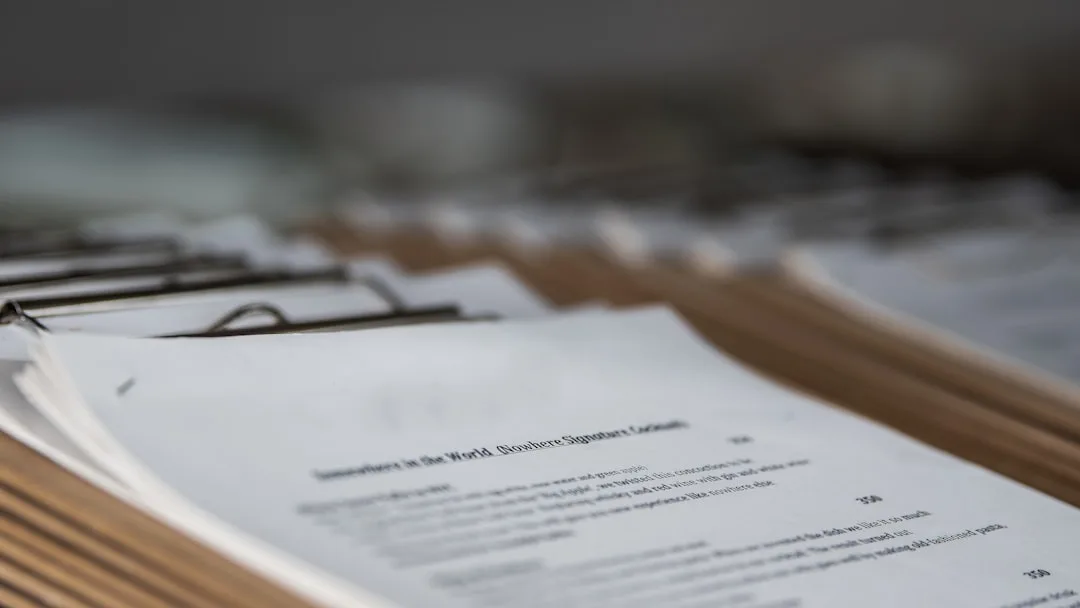
EQIP cost-share money does not flow on good intentions. Every dollar paid hinges on EQIP practice documentation—the paper trail proving you completed the conservation work exactly as planned. Most row-crop producers focus on the signup deadline and practice selection, then stumble on documentation, leaving thousands in unverified claims.
NRCS does not simply trust your word. The agency requires contemporaneous evidence: photos with dates, receipts, invoices, soil test results, contractor certifications, equipment logs, or field maps stamped with implementation dates. Without it, your reimbursement request stalls or gets denied entirely.
Find your state's signup window: Find your state's signup window.
EQIP practice documentation ensures proper NRCS verification processes
When you sign an EQIP contract, you commit to completing specific practices at specific locations within a defined timeline. NRCS assigns a practice code—say 340 for cover crop establishment—and that code carries mandatory documentation requirements.
After implementation, you submit a request for reimbursement. NRCS then cross-checks your claim against your documented evidence. A cover crop signup, for example, requires proof of planting date, seed variety, seeding rate, and, often, mid-season photos showing stand establishment. Missing any one of these threads can delay or forfeit your payment.
Documentation must be organized, legible, and traceable to the specific field and contract year. A blurry photo without a date stamp or field boundary map creates a gap that NRCS cannot bridge.
Quick Tips
- Photograph implementation on the day it happens; include a watermark or handwritten sign with the date and field identifier.
- Keep contractor invoices and purchase receipts in one digital folder, organized by practice code and contract year.
- Request NRCS documentation checklists at signup; do not wait until reimbursement time to ask what they need.
- Maintain soil test results, weather records, and equipment service logs—these all support conservation claims.
- File a copy of every submitted document with your own records in case NRCS asks for clarification.
Documentation Requirements by Practice Type
Different practices demand different proofs. The more complex the practice, the more documentation burden falls on you.
| Practice Category | Typical Documentation | Common Gaps |
|---|---|---|
| Cover Crop (Code 340) | Seed receipt, planting date photo, stand check photo, termination record | Missing mid-season stand photo or ambiguous termination date |
| No-Till (Code 329) | Equipment certification, planting records, receipts, field history | No dated photo of first planting; receipts for equipment without field info |
| Soil Health Plan (Code 450) | Baseline soil test, completed plan form, signed agreement, photo of records on-site | Plan submitted but baseline test predates contract; no proof of farmer review |
| Structure/Facility | Contractor invoice, materials receipt, before/after photos, inspection certification | Contractor invoice lacks date or field reference; photos lack scale or location marker |
Soil health and cover crop practices, the most common in row-crop EQIP, require multiple touchpoints. Why EQIP Soil Health Practices Matter More Than Equipment Grants unpacks the agronomic case, but the documentation backbone is equally critical.
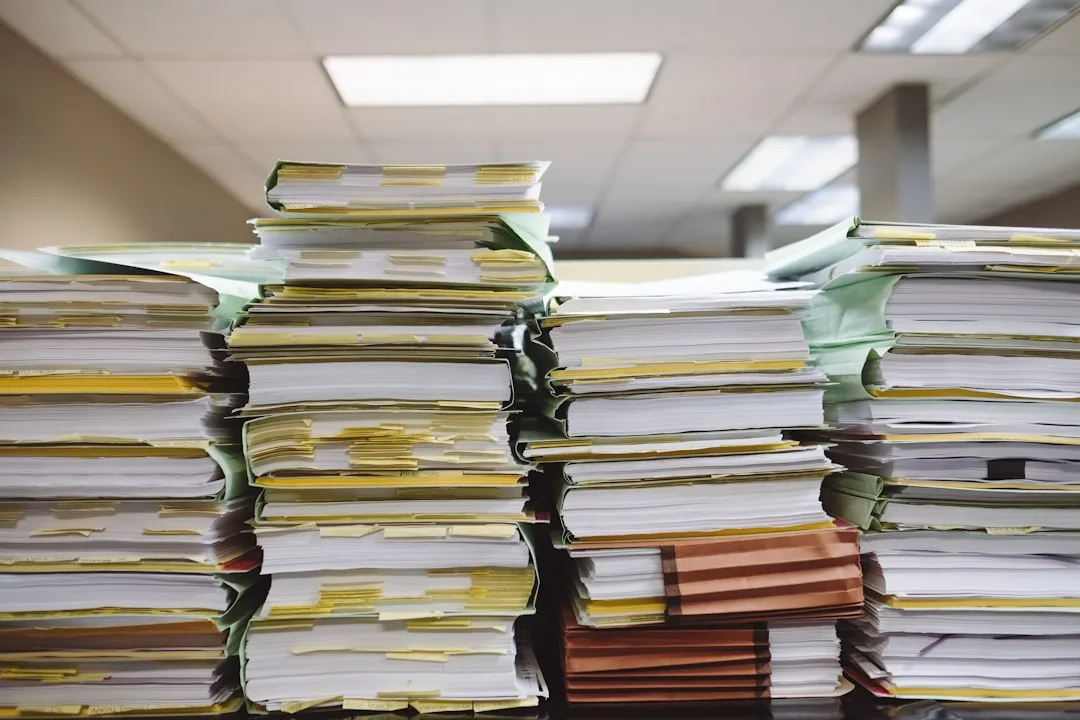
The Documentation Failure Mode — Incomplete Contractor Records
Here is where most producers stumble: they hire a contractor to establish a cover crop or apply a soil amendment, receive an invoice, and assume the invoice is sufficient proof. It is not.
Practice Code Mismatches and Scope Creep
A second failure mode emerges when producers install a practice correctly but assign it the wrong practice code during documentation. Soil health bundles in EQIP often allow multiple code pathways—cover crop establishment (code 340), residue and tillage management (code 329), or prescribed grazing (code 528)—depending on the producer's overall conservation goal. Selecting the wrong code does not change what was installed on the ground, but it can trigger a compliance audit if the documented code does not align with the cost-share rate, payment cap, or eligibility requirement attached to that code. NRCS reviewers cross-reference invoices, field photos, and signed contracts against the practice code in the system of record. A mismatch flags the payment for potential recovery, even if the physical work was sound. Producers must confirm with their NRCS planner which code applies before work begins, and contractors must include that code on every invoice and receipt.
Photo Documentation and Timestamping Gaps
Visual evidence is a non-negotiable requirement for soil health practices. EQIP Cover Crop Cost-Share Timing and Signup Mechanics explains the enrollment timeline, but photo protocols are often overlooked. NRCS expects dated, geotagged photos taken at establishment (within days of planting or application) and at a verification checkpoint (typically 30–60 days post-establishment for cover crops). Photos must clearly show the field boundary, the practice itself, and any signage or landmarks that tie the image to the specific field in the contract. Phone photos with embedded metadata are acceptable, but bulk uploads without dates or field identifiers create audit risk. Producers who skip the post-establishment photo checkpoint often cannot prove that the practice was maintained at the required density or coverage, leaving them vulnerable to a finding of non-compliance even if the cover crop is visibly present on the farm months later.
Try the Calculator
Estimate what EQIP pays toward a practice before you contact your local NRCS Service Center.
EQIP pays a set per-unit rate from each state's fiscal-year payment schedule — about 75% of a practice's typical cost, or 90% for historically underserved producers; this estimate applies those shares to your cost. NRCS limits each EQIP contract to $450,000 per person or legal entity; under the current farm-bill extension no separate aggregate per-producer limit applies (it applied to 2018 Farm Bill contracts through FY2023). Limits can change with new farm-bill legislation. Rates vary by state and county; verify with your local NRCS office. Find your state's signup window →
Find your state's signup window: Find your state's signup window.
Frequently Asked Questions
What happens if I lose a receipt or photo after I submit my EQIP claim?
Contact your local NRCS office immediately. Explain what document is missing and why. NRCS may accept a sworn affidavit or alternative evidence (such as a bank statement or contractor confirmation) in some cases, but do not assume they will. Prevention is far simpler than recovery.
Can I use cell phone photos as NRCS documentation?
Yes, but only if the photo has a clear date stamp and is in sharp focus. Blurry, undated photos are not acceptable. Ensure your phone's date and time are set correctly before taking implementation photos.
How long must I keep EQIP documentation after I receive payment?
NRCS recommends keeping records for at least three years after contract completion. Federal audits can extend this window, so check your state office guidance. Digital copies in secure cloud storage cost nothing and protect you against loss.
What if my contractor did not give me itemized invoices?
Request them in writing before final payment. If the contractor refuses, NRCS may not accept the claim. Always require detailed, dated invoices as a condition of contract work—it protects both you and the contractor.
Do I need to document practices that NRCS staff observed during an inspection?
Yes. NRCS staff inspections create official notes, but you should also submit your own documentation (photos, receipts, records) to create a complete file. Never rely solely on the inspector's observation; your evidence strengthens the claim.
Can I submit documentation electronically, or does NRCS require paper copies?
Most NRCS offices now accept digital submissions via email or online portals. Check with your state office, as some retain paper-file requirements. Either way, keep both digital and paper copies for your own records.
Related Articles
Related: NRCS Contract Renewal Deadlines Drive Your Next EQIP Window
Related: EQIP Cross-Compliance Verification Protects Your Cost-Share Funding