
Commodity price volatility planning is the gap between a budget that survives a price crash and one that forces you to borrow mid-year or skip a land payment. Too many producers treat price swings as random noise—something to worry about when they happen, not something to plan for before planting. That backwards approach costs real dollars every year, especially in years when volatility spikes and storage decisions become margin-makers or margin-destroyers.
The mechanics are straightforward: your gross revenue per acre depends on yield AND price. You can forecast yield with reasonable accuracy based on soil, weather, and agronomic inputs. But price? Price moves in a band tied to global supply, USDA crop reports, currency moves, and geopolitical events. That band widens and narrows unpredictably.
The job of commodity price volatility planning is not to predict the future price. It is to plan your cash flow and margin targets in a way that works across a realistic range of outcomes, not just the outcome you hope for.
How Price Swings Destroy Unplanned Budgets
A producer budgets for a given yield and assumes a price. If yield hits target and price meets expectation, margin is fine. But real farms rarely see both. One year, yield climbs 15 percent above trend—supply expands, prices drop 20 percent—and the bigger harvest brings lower total revenue than last year's smaller crop.
Without a volatility plan, that producer has already committed ground, seed, fertilizer, and fuel. The cash outlay was locked in at budget. The revenue side collapsed. The result is a scramble: sell now to raise cash, or store and hope prices recover by spring.
The mistake producers make: they budget to breakeven at a single price point, not across a price range. Breakeven at $5.50 corn sounds prudent until harvest hits at $4.80 and you are suddenly underwater with no strategy in place.
Quick Tips
- Set a breakeven price range (example: $4.50–$6.00 corn), not a single point. Plan inputs so you cover cash costs at the low end.
- Before planting, decide how much crop will be sold at harvest, how much stored for later sale, and how much will be forward-contracted.
- Use price volatility hedging tools (options, forward contracts) to reduce the tail risk of extreme moves.
- Track your local basis separately from commodity prices. Basis moves independently of USDA prices and can widen or narrow your margin.
- Review your plan quarterly. If crop conditions or price trends shift materially, adjust your storage and sales strategy mid-year.
The Three Levers of Commodity Price Volatility Planning
Price-aware producers use three levers to manage volatility: timing of sales, use of storage, and forward contracting. None of these are trades or bets. They are budget tools.
Sales timing means you don't sell all your crop on the same day. Some farmers sell 40 percent at harvest (cash flow security), store 40 percent (bet on spring recovery), and forward-contract 20 percent (price floor lock). That split is not random—it comes from your break-even analysis and your storage capacity.
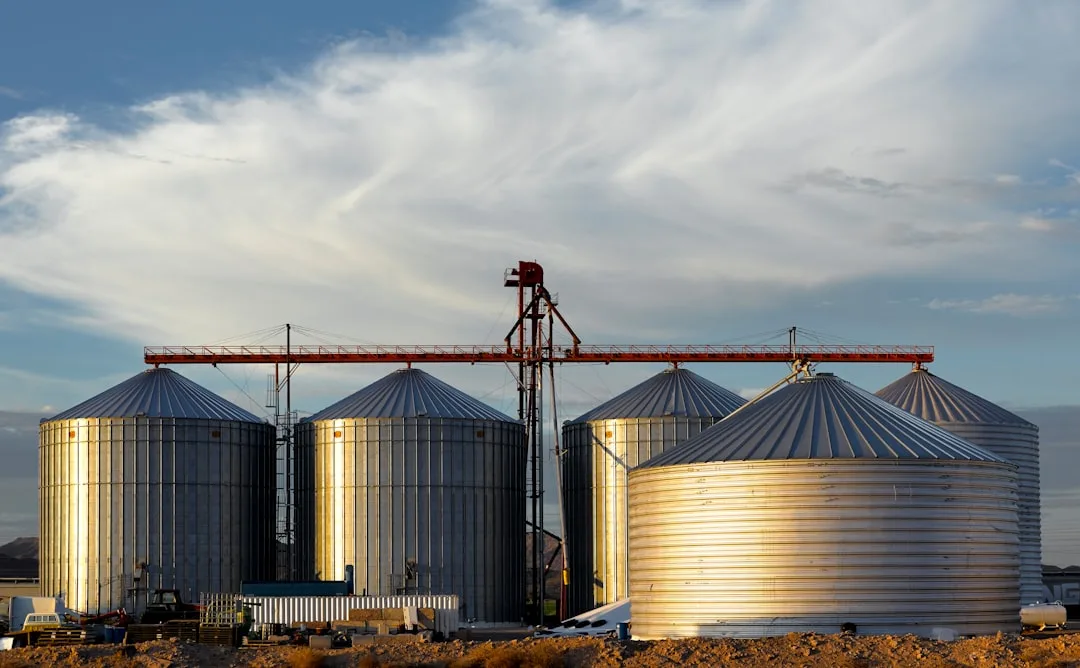
Storage is a tool only if you can afford to carry it and only if your facility or elevator agreement lets you hold grain and withdraw it later without penalty. Check your elevator contract now for withdrawal fees, insurance costs, and shrink rates. Those costs eat margin, especially if prices do not cooperate.
Marketing-year-average price thinking is the third lever. Instead of obsessing over harvest price, aim to sell your whole-year crop at an average price spread across multiple sale points (harvest, winter, spring). That average is often closer to your budget assumption than any single month's price.
| Sales Lever | Mechanics | Volatility Protection |
|---|---|---|
| Harvest Sales (30–40%) | Sell at combine; quick cash, no storage cost | Low. Price is set by market on day of sale. No waiting. |
| Forward Contracts (20–30%) | Lock price weeks or months before harvest | High. Removes tail-risk downside; you know your floor. |
| Storage + Deferred Sale (30–50%) | Hold grain; sell winter, spring, or on-demand | Medium. Captures seasonal spreads; carries storage cost and interest burden. |
| Options/Put Contracts (5–15%) | Pay upfront premium for price floor guarantee | Very high. Tail risk eliminated; you keep upside. Premium is insurance cost. |
Building a Volatility Budget Before Planting
Start now, not at harvest. Before you sign a seed order, calculate your all-in cash cost per acre: seed, fertilizer, fungicide, fuel, labor, land rent, and machinery repair allocated per acre. Be honest about variable costs. Many producers underestimate fertilizer and drying by 15 percent.
Next, list your yield assumption—use a multi-year average, not a hope number. Check your GreenMatrix yield history for your county and soil type.
Then check your state's current price for reference, and build three budget cases: pessimistic (example: $4.50 corn, 165 bu/ac), base case (example: $5.25 corn, 175 bu/ac), and optimistic (example: $6.00 corn, 185 bu/ac). Calculate profit margin per acre in each case. If your pessimistic case shows a loss or margin below 10 percent, your input costs are too high for your farm's risk tolerance.
Lock In Price Protection Before Planting
Once you have built your three budget scenarios, the next decision is whether to hedge or forward contract. Many farmers wait until harvest to think about price, by which time their margin is already locked in by yield and cost. Instead, lock in a floor price weeks or months before planting.
Use futures contracts, options, or forward contracts with your elevator to establish a minimum price. Your pessimistic case should align with a price you can live with—one that still covers all input costs plus a margin. If you can buy a put option or lock a forward contract at that price level, you remove the downside risk while keeping upside potential if prices rise at harvest.
The timing depends on your cash flow and risk comfort. Some producers hedge 50 percent of expected production three months before planting and adjust as growing season unfolds. Others wait until pollination when yield risk becomes clearer. How Crop Price Volatility Hedging Protects Row Crop Revenue explains why reactive hedging often costs more than planned hedging.
Monitor and Adjust During the Growing Season
Your budget is not static. Track actual input costs as the season unfolds. If fertilizer prices drop 20 percent after application, update your profit projection. If a late frost damages early growth or a mid-summer flood hits, revise your yield assumption downward and reassess whether your current price hedge still makes sense.
Check commodity prices weekly, not daily. Why Marketing-Year-Average Price Matters More Than Monthly Swings explains why obsessing over daily moves leads to emotional decisions. Instead, compare current prices to your three budget cases and your hedged floor. If prices are tracking above your base case by July, you have earned room to take profit on a portion of expected production. If prices collapse below your pessimistic case, your hedge is working as intended.
Try the Calculator
Estimate gross revenue at this month's price or the marketing-year-average.
Gross revenue only, not net income. Prices: USDA NASS national price received, Aug 2026 (updated automatically). Check your state's current price →
Check your state's current price: Check your state's current price.
Frequently Asked Questions
What is a realistic break-even price for corn or soybeans in my area?
Break-even varies by input costs, yield assumption, and land costs. Use your own farm data: divide your total cash costs (seed through harvest) by your expected yield. Check GreenMatrix county-level price history to see where your break-even sits relative to the last 5–10 years of actual prices.
Should I sell all my crop at harvest?
No. Selling 100 percent at harvest locks in harvest price (often the lowest of the year). A split strategy—harvest cash (30–40 percent), forward contracts (20 percent), and storage (40–50 percent)—spreads your sales across multiple price points and typically produces a higher average price.
How do I know if my elevator's storage contract is fair?
Check the contract for: (1) per-bushel storage fees (compare to 2–5 cents per bu annually in your region), (2) insurance cost, (3) shrink percentage, and (4) withdrawal rules. Calculate total storage cost as a percentage of your expected selling price; if it exceeds 3–4 percent of that price, storage becomes a margin-eroder.
What is forward contracting, and does it lock me out of higher prices?
Forward contracting means agreeing to sell grain at a set price weeks before harvest. Yes, it caps your upside if prices spike—but it guarantees you will not lose money if they crash. Most farms forward-contract 15–30 percent of their crop to lock a price floor, then bet the rest on the market.
Can EQIP or crop insurance help protect against price volatility?
EQIP can stabilize yield over time (more stable yield = less revenue pressure), but it does not hedge price. Crop insurance with margin components can cover both yield and price losses; check your broker for options in your state.
When should I review and update my volatility plan?
Review quarterly: after planting, mid-summer, at harvest, and in winter. If crop condition, prices, or basis change materially, adjust your sales timing and forward-contract targets.
Related Articles

Related: How Deferred Pricing Mechanics Lock Your Row Crop Revenue
Related: Cash Price and Futures Basis Divergence Determines Your Row Crop Return