
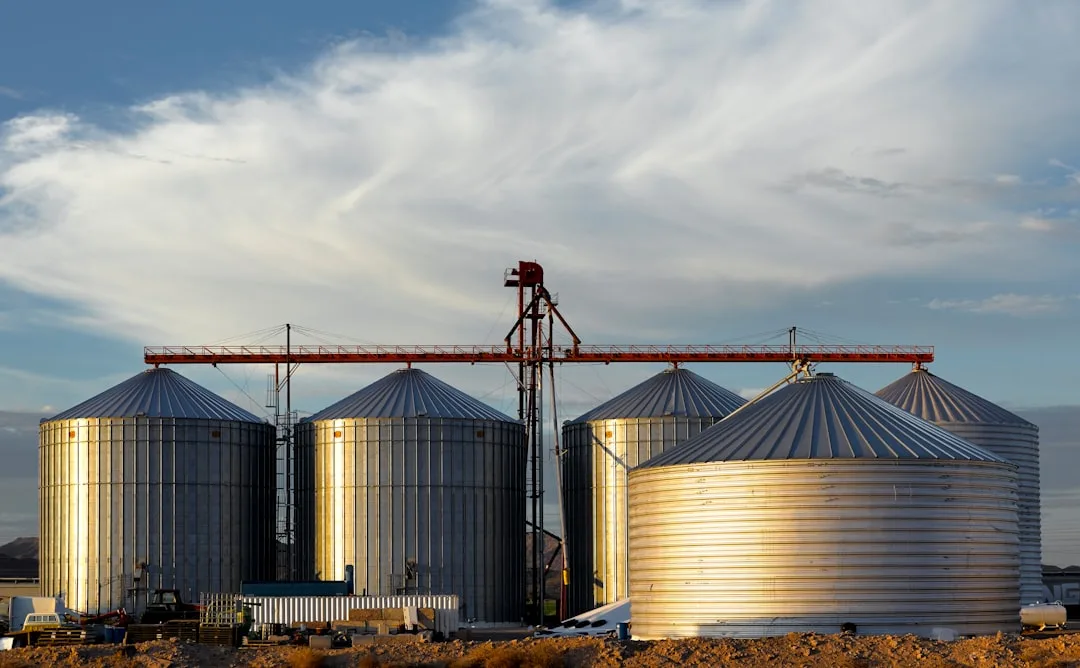
Most row crop farmers sell at harvest because they need cash or lack storage. But selling into harvest lows, month after month, leaves money on the table—especially when spring prices historically trade higher. Storage arbitrage is the mechanics of capturing that price spread while managing the cost to hold grain. It's not speculation or gambling; it's a math problem with real levers you control.
Understanding storage arbitrage row crops and their core mechanics
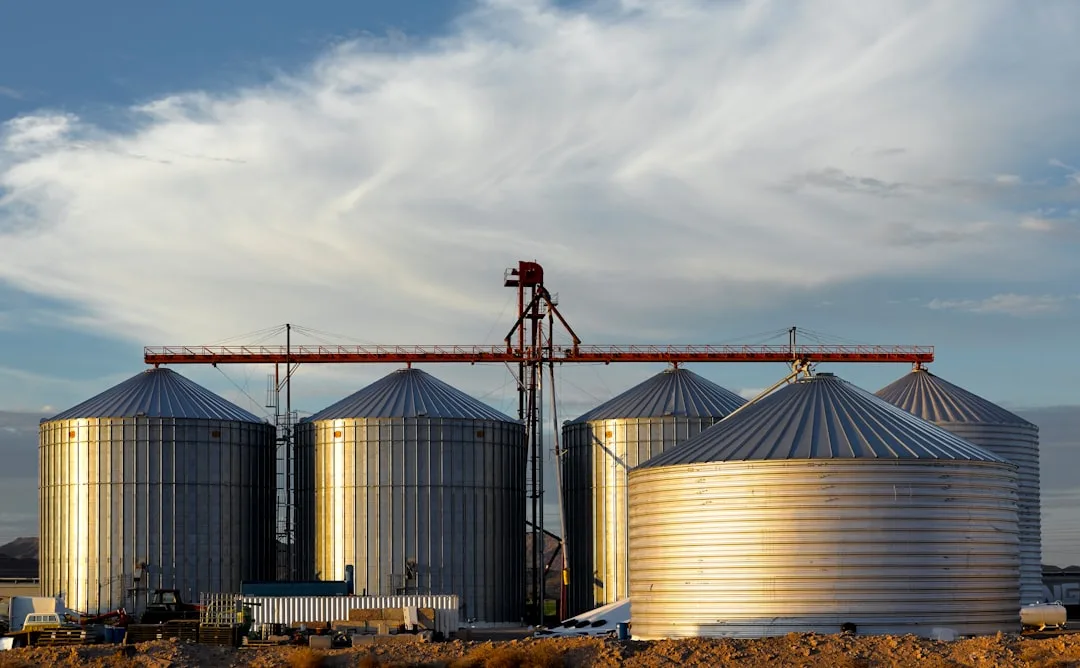
Storage arbitrage rests on three moving parts: the seasonal price spread (the difference between harvest and spring prices), your carrying costs (interest, storage facility rental or depreciation, shrink, and insurance), and your available storage capacity. If the spread exceeds your costs, you profit by holding. If it doesn't, you lose.
The seasonal price spread exists because demand doesn't stop in October; it stretches across the marketing year. Export demand, feed mills, and refiners buy all year. But harvest floods the market with supply, pushing prices down. Months later, when many farmers have already sold and storage is fuller, prices typically strengthen.
Your carrying costs include the cost of money (interest on the grain value or the cost of capital tied up), facility costs (rent or ownership depreciation), and shrinkage (moisture loss, spoilage risk, handling waste). These costs are measurable and often forecastable.
Quick Tips
- Calculate your breakeven spread: add up your carrying costs per bushel per month, then multiply by the months you intend to hold. That's your minimum spread target.
- Use your elevator's basis bid (not the Chicago futures price) as your harvest price; compare it to their spring bid to see your real storage arbitrage opportunity.
- Track your facility costs separately from your commodity value—confusing the two is the #1 reason farmers think they're making storage profit when they're actually breaking even.
- If your carrying costs exceed $0.15/bu for a nine-month hold, storage arbitrage margins shrink fast and you're exposed to price risk with minimal cushion.
Seasonal Spreads and Historical Patterns in Row Crops
Corn and soybeans show consistent seasonal patterns, though the magnitude changes year to year based on global supply, export demand, and production surprises. Historically, harvest (October–November) prices tend to be lowest, and spring (March–May) prices tend to be higher—but that pattern is not guaranteed, and the spread size varies widely.
A five-year average spread might tell you that soybeans trade $0.30–$0.50/bu higher in May than in November, but that's an average. One year the spread might be $0.05/bu (barely worth holding), the next year $0.75/bu (excellent arbitrage opportunity). Your carrying costs don't change much year to year, but the spread does.
This is why forward contracting and how crop price volatility hedging protects row crop revenue become critical tools: they let you lock in a spread ahead of time, so you know your margin before you fill the bin.
| Scenario | Harvest Price | Spring Price |
|---|---|---|
| Narrow Spread (Low Arbitrage) | $4.50/bu | $4.65/bu |
| Moderate Spread (Fair Arbitrage) | $4.50/bu | $4.95/bu |
| Wide Spread (Strong Arbitrage) | $4.50/bu | $5.25/bu |
| Carrying Costs (6-month hold) | Example: $0.12/bu | Net Margin After Costs |
The Cost-Spread Breakeven Calculation
Your breakeven is simple math. If your carrying costs for a six-month hold equal $0.12/bu, you need a spread of at least $0.12/bu to break even. Any spread above that is profit; any spread below that is a loss.
Most producers underestimate carrying costs. Interest alone—if you financed the grain at 5–7% annual interest—costs $0.02–$0.03/bu per month on a $4.50/bu corn price. Add facility rent or depreciation ($0.01–$0.02/bu per month), shrinkage and handling ($0.005–$0.01/bu per month), and you're quickly at $0.08–$0.12/bu for a six-month hold.
The mistake most farmers make: they see a $0.30/bu spread and assume it's profit, forgetting that their carrying costs might consume $0.12 of it, leaving only $0.18/bu actual margin. Worse, if prices fall unexpectedly, that thin margin evaporates.
Storage Capacity and Risk Management
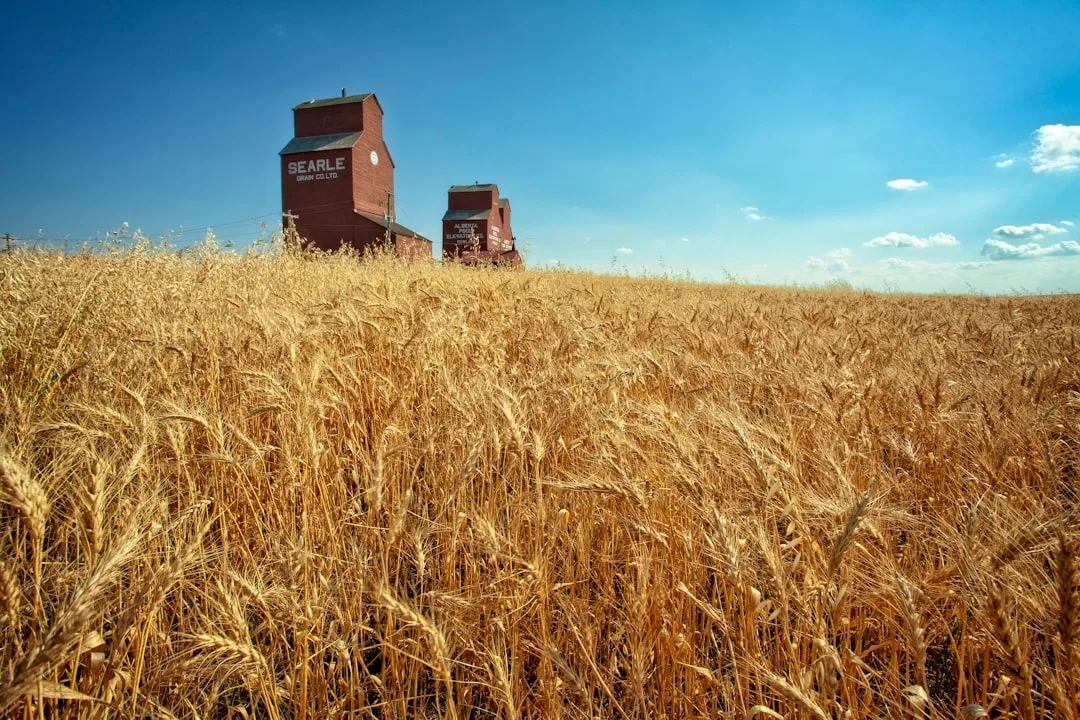
Your available storage dictates how much grain you can arbitrage. If you own bins, your carrying costs are lower (no rent), but you're exposed to equipment depreciation and repair. If you rent space, your costs are fixed and known, but less flexible if market conditions shift.
Many farmers use a mix: on-farm bins for part of the crop, commercial elevator storage for the rest. This hybrid approach lets you capture arbitrage on the portion where your costs are lowest while keeping some grain liquid for immediate sale.
The key risk: being forced to sell early if you run out of storage or need cash. Why marketing-year-average price matters more than monthly swings emphasizes that locking in a target price earlier via contracts reduces the temptation (and need) to sell into unfavorable timing.
Linking Storage Arbitrage to Your Annual Marketing Plan
Storage arbitrage is not a decision made harvest morning; it's part of your marketing strategy built during the growing season. By late summer, you should have a rough forecast of your carrying costs, some expectation of the seasonal spread range, and a clear picture of your storage capacity.
Use that data to decide: how much grain will I contract forward at harvest? How much will I store and sell later? At what price will storage arbitrage no longer make sense? These decisions lock in profitability before uncertainty hits.
Check your state's current price and compare your local elevator's harvest bid to its spring bid. That's real data from your region. If the historical spread in your area is thin, storage arbitrage may not justify the risk or cost.
Common Mistakes in Storage Arbitrage Execution
Try the Calculator
Estimate gross revenue at this month's price or the marketing-year-average.
Gross revenue only, not net income. Prices: USDA NASS national price received, Aug 2026 (updated automatically). Check your state's current price →
Check your state's current price: Check your state's current price.
Frequently Asked Questions
What counts as a carrying cost for grain storage?
Carrying costs include the interest cost on money tied up in grain (typically 5–7% annually), facility rent or depreciation, shrinkage and handling losses, and insurance. These typically total $0.08–$0.15/bu for a six-month hold, depending on your storage setup and financing rate.
How do I know if storage arbitrage is worth it in my area?
Compare your local elevator's harvest bid to its spring bid (not the Chicago futures price). If the spread exceeds your carrying costs by at least $0.05–$0.10/bu, arbitrage is worth considering. Ask your elevator for historical spread data by month.
What happens if spring prices don't rise like I expect?
If prices fall below your harvest price, you lose money on top of carrying costs. That's why locking in a forward contract before harvest—or using options to protect downside—is critical. Never rely on an expected spread; plan for volatility.
Is storage arbitrage the same as speculation?
No. Arbitrage is holding a commodity you already own and selling it later at a forecasted higher price based on historical spreads and your cost math. Speculation is buying grain you don't own and betting prices rise. Arbitrage is a business mechanic; speculation is a bet.
Can I use futures or contracts to lock in a storage arbitrage profit?
Yes. You can sell a forward contract at harvest at a known price, then sell your stored grain at spring market price, capturing the spread minus your carrying costs. This locks in your arbitrage margin regardless of price swings.
How much of my crop should I store versus sell at harvest?
That depends on your cash flow needs, storage capacity, and your analysis of the harvest-to-spring spread. Many profitable operations store 30–50% of the crop when conditions favor arbitrage and sell the rest at harvest to cover operating costs and debt service.
Related Articles

Related: Price Floor Contracts Protect Row Crop Downside Risk
Related: Why Commodity Price Volatility Planning Matters for Your Farm Budget