
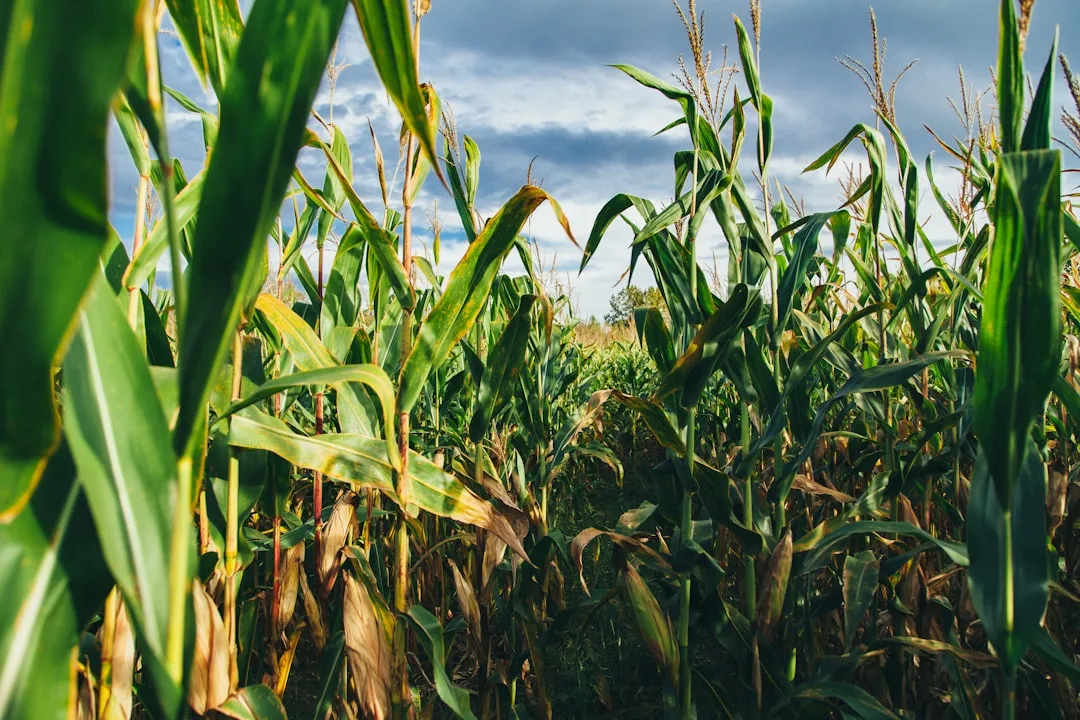
Picking the right corn or soybean hybrid is not a one-size-fits-all decision. Your neighbor's top-performing variety may underdeliver on your farm, and a genetics choice that works in central Illinois may not suit your western Kansas environment. Hybrid variety selection and yield response are direct: the variety you plant determines your yield ceiling, but your soil, weather, and management determine whether you hit it. Understanding how to read yield data by hybrid, by field, and against regional norms lets you stop guessing and start matching genetics to agronomic reality.
Hybrid variety selection yield response determines your potential outcomes
Every hybrid comes with a genetic yield potential under ideal conditions. That number is real, but it is conditional. A corn hybrid rated for 180 bushels per acre in a breeder's trial assumes optimized plant population, timely moisture, zero disease pressure, and harvest timing. On your farm, none of those are guaranteed.
Yield response to a hybrid depends on how well that genetics' traits match your field's constraints. A variety bred for drought tolerance may excel during dry years but leave yield on the table in wet springs. A hybrid optimized for high plant populations may lodge or underperform if your soil can't support aggressive stand density. The key insight: a "good" hybrid is one that responds to your conditions, not a breeder's test strip.
This is why regional trials matter more than national rankings. Corn varieties perform differently in the Corn Belt than in the Southwest, and soybean maturity groups that shine in Minnesota may not fill pods properly in Texas. Tracking your own field-level yield by variety, year over year, is how you cut through marketing claims and isolate real performance on your soil.
Quick Tips
- Plant a test strip of two or three candidate hybrids on the same field to compare yield under identical conditions.
- Record hybrid, maturity, population, and harvest moisture for every field; yield without context is noise.
- Compare your hybrid's yield to your regional average for that maturity class—not to the breeder's claim.
- Rotate hybrids every 3–4 years to avoid variety-specific pest pressure and preserve soil health responses.
How Maturity Group and Growing-Degree-Day Alignment Drives Yield Response
Corn maturity and soybean maturity groups are not interchangeable across regions. A 112-day corn hybrid that thrives in central Iowa may not fill grain properly in northern Minnesota if the growing season is shorter. A soybean variety bred for a 2.3 maturity group in Illinois may over-mature and shatter losses in South Dakota.
The mechanism is growing-degree-days (GDD): the accumulated heat a plant needs to complete its lifecycle. Your farm's GDD budget is fixed by latitude, planting date, and weather. If your chosen variety requires more GDDs than your field can deliver in a normal year, you risk underfilled grain, lower test weight, and reduced yield. The mismatch is not random—it is repeatable and measurable in your yield data.
Producers often fall into the trap of chasing a "premium" variety bred for a warmer region, betting that one warm year will justify it. That is backward. Your baseline should be a maturity group that reliably fills grain in 80% of your years, not the 20% bonanza. Check your state's variety trial results—most land-grant universities publish regional GDD data and variety performance by location.
| Variety Factor | Yield Impact Mechanism | How to Measure on Your Farm |
|---|---|---|
| Maturity mismatch | Incomplete grain fill; lower kernel weight | Track harvest moisture and test weight by hybrid; compare to 3-year average |
| Disease tolerance rating | Reduced foliar disease and stalk rot pressure | Scout 4–5 fields mid-season; note disease incidence by variety block |
| Drought tolerance trait | Maintained yield during low rainfall periods | Compare dry-year yield gaps between varieties using 5+ year history |
| Root lodging resistance | Reduced harvest losses and combines easier | Document pre-harvest lodging; measure harvest losses in test strips |
The Most Common Variety Mistake — Chasing Last Year's Winner
The #1 error producers make is switching to a variety because it outperformed in one good year. That hybrid may have simply had ideal growing conditions, not superior genetics. The next year, weather shifts, and that variety becomes average or below-average. You have now lost continuity in your performance data and disrupted any pest-management patterns you had built around the previous variety.
Example: a producer plants a drought-tolerant corn hybrid during a dry year and records 15 bushels above their usual average. Excited, they switch to that hybrid exclusively the next year—which is wet. The variety, optimized for moisture efficiency, does not translate that capability into higher yields in wet conditions. Yield drops below baseline, and the producer blames the hybrid, when the real culprit was year-to-year weather swings masked by variety choice.
The fix is stability, not chasing. Use a proven, well-adapted variety as your baseline for 3+ years. Track yield, test weight, harvest moisture, and disease pressure. Test one new candidate variety on 5–10% of your acres each year to evaluate it against your proven baseline under identical field conditions. After 2–3 years, if the challenger consistently outperforms, then rotate it in. This discipline reduces noise and reveals signal.
Using Field-Level Yield Data to Isolate Variety Response
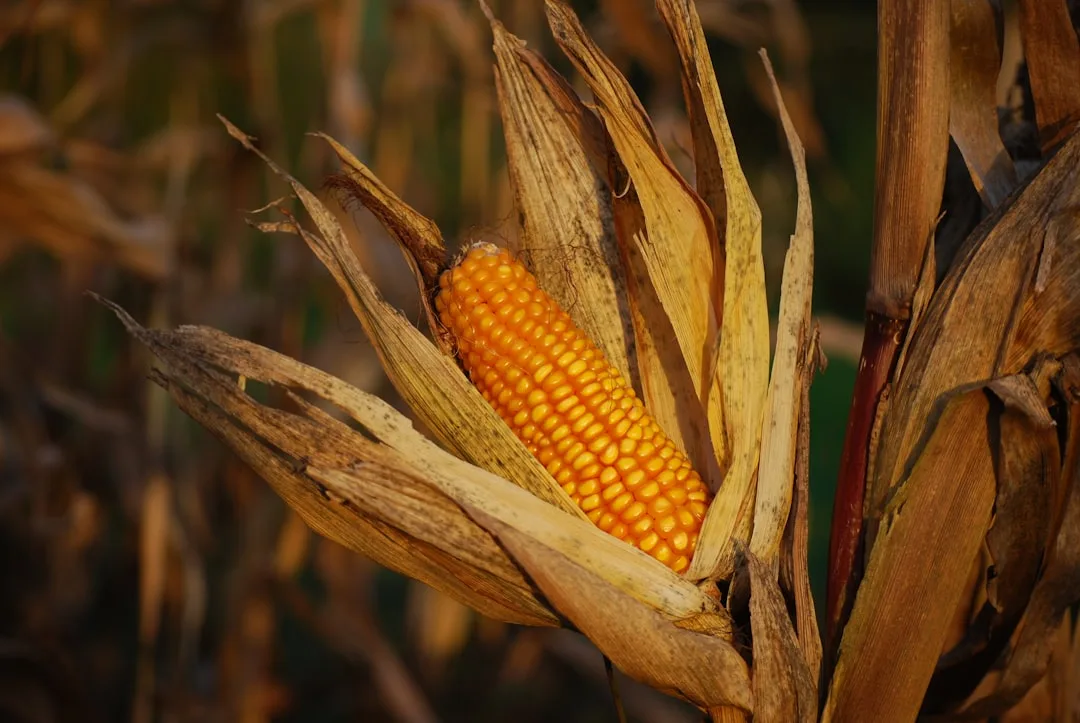
Yield data interpretation turns raw numbers into field action, but only if you structure your data capture around variety comparisons. This means recording hybrid code, seed lot, planting date, population at emergence, and harvest details (moisture, test weight) for every field. Without this metadata, a 150 bu/ac yield number tells you almost nothing about whether your variety choice was sound.
Once you have 3+ years of field-level data by variety, calculate your own baseline yield for each variety on each soil type. For example, if you have planted a 108-day corn hybrid on your silt-loam fields for three years and averaged 145 bu/ac in average weather, that is your reference point. A 152 bu/ac result in an above-average year is good, not exceptional. A 138 bu/ac in a dry year signals the variety may lack drought resilience for your region.
Compare your hybrid's performance to your regional average published by your state agricultural extension or a neutral data source. See your state's full yield data to access regional variety performance benchmarks. This reveals whether your variety is outperforming, matching, or lagging the regional norm for that maturity and soil class. Over time, this comparison isolates real genetic advantage from weather and management noise.
Soil Type and Variety Matching Shape Yield Stability
The same hybrid does not perform identically across different soil types within your farm. A corn variety that excels on your deep, well-drained loam may underperform on clay soils where poor drainage during wet springs stresses root development. A soybean variety with shallow root architecture may fare well on lighter soils but struggle to extract moisture from clay in drought years.
Variety-by-soil matching is where soil moisture retention drives yield stability. A variety with strong root architecture and drought tolerance translates that advantage only on soils where drought is a real constraint. On a moisture-retentive soil, that same trait adds no value. Conversely, a variety optimized for moisture efficiency wastes genetic potential on a clay soil where moisture is abundant.
Track variety performance stratified by soil type. If you plant the same hybrid across three soil types, compare yields separately for each soil. This reveals whether variety response is universal or soil-dependent. Over time, you can match specific varieties to specific soil zones and maximize return on genetics investment. This is the real power of field-level yield data: not one global answer, but context-specific performance.
Building a Multi-Year Variety Database Reduces Future Risk
The most valuable asset a producer can build is a personal, farm-specific database of variety performance. This is not complex: spreadsheet rows are field ID, year, hybrid code, maturity, soil type, planting date, emergence stand, harvest moisture, test weight, yield. Over 5+ years, this becomes a decision-support tool worth far more than any seed company's ranking sheet.
Use this database to answer concrete questions: What is my most reliable corn hybrid on clay? Which soybean variety gives me the lowest yield variance in dry years? Does my expensive premium hybrid outperform my standard baseline by enough to justify cost? How much yield do I sacrifice if I choose a disease-resistant variety over a high-yield variety in my region?
Variety selection is agronomic, not commercial. Do not plant what seed dealers are pushing or what won blue ribbons at neighboring farms. Plant what your data shows delivers consistent yield on your soil, in your weather, under your management. Discipline in data capture and honest interpretation of that data is how you move from variety gambling to variety strategy.
Try the Calculator
Estimate the payback on variable-rate seeding, zone-based fertility, and overlap reduction for your farm.
Estimate only — based on industry-average implementation costs (variable-rate seeding $18/ac, zone-based fertility $22/ac, overlap reduction $9/ac; $12,000 fixed + $17/ac ongoing) and USDA yield benchmarks, not a quote. Prices: USDA NASS national price received, Aug 2026 (updated automatically). See your state's full yield data →
See your state's full yield data: See your state's full yield data.
Frequently Asked Questions
How long does it take to know if a new hybrid is really better than my current one?
At least two to three growing seasons under different weather conditions. One good year does not prove superiority; you need performance across dry, wet, and average years to isolate real genetic advantage from weather luck.
Should I plant the same hybrid across all my fields?
No. Soil type, drainage, and field-specific moisture patterns affect variety response. Test your hybrid on each major soil type and compare yields separately; a single variety may excel on one soil and underperform on another.
What is the biggest mistake when switching to a new hybrid?
Switching to a new variety after one exceptional year without comparing it to a baseline across multiple years and weather conditions. This confuses luck with genetic superiority and breaks your data continuity.
How do I know what maturity group is right for my region?
Consult your state's university extension variety trials and growing-degree-day (GDD) data for your location. Your maturity should reliably fill grain in 80 percent of your years, not just the warmest years.
Why does my neighbor's top hybrid underperform on my farm?
Hybrids respond differently to different soils, drainage, and local weather patterns. A variety optimized for one soil type or climate may not suit yours, even if your farms are geographically close.
How do I track variety performance if I only plant one hybrid per year?
Dedicate a 5–10 percent test strip to one candidate variety while keeping your proven baseline on the rest of the field. After 2–3 years, you will have solid comparison data before rotating the new variety in.
Related Articles
Related: Soil Compaction and Yield Loss Detection Across Your Farm
Related: Why Yield Monitoring Consistency Across Seasons Matters for Your Farm